Act three · The sea
Mystic, the Thames, and the maritime coast
Connecticut's southeastern coast holds the state's seafaring memory: Mystic Seaport's tall ships and the last wooden whaleship, the submarine yards and the first nuclear submarine on the Thames at Groton, and the sheltered waters of Long Island Sound.
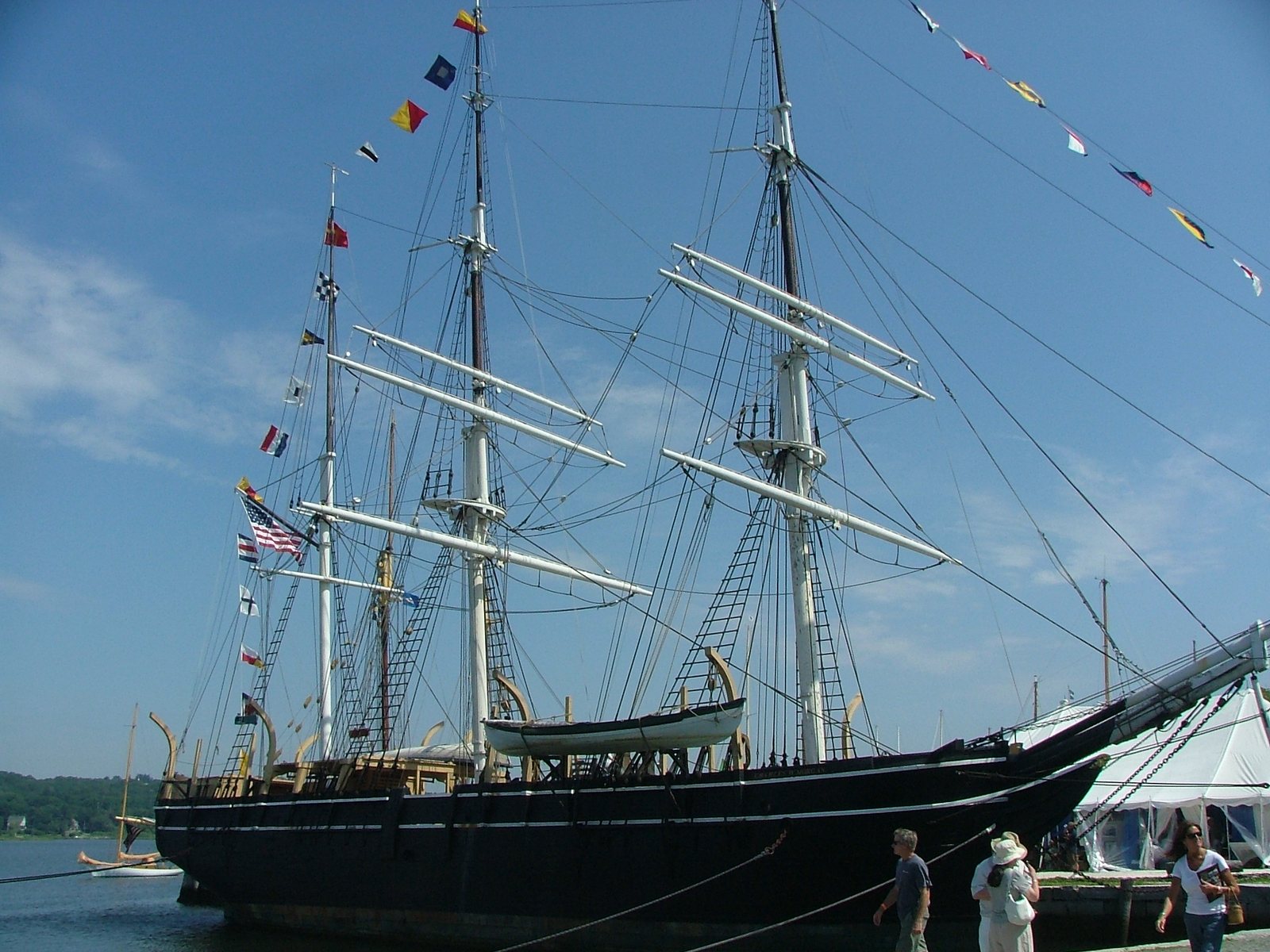
Mystic Seaport and the whaling past
Mystic Seaport Museum, founded in 1929, is one of the country's leading maritime museums — a recreated nineteenth-century seafaring village along the Mystic River with a working preservation shipyard and several National Historic Landmark vessels.
Its centerpiece is the Charles W. Morgan of 1841, the last wooden whaleship in the world and the oldest surviving American merchant vessel. Walking its deck is the clearest way to feel Connecticut's age of sail.
The Thames and the submarine coast
A few miles east, the Thames River at Groton and New London is the center of American submarine history. The Submarine Force Museum on the river is home to USS Nautilus, the world's first nuclear-powered submarine and the first vessel to reach the North Pole.
Where Mystic tells the story of sail, the Thames tells the story of the twentieth-century navy — two chapters of the same maritime state.
The Long Island Sound
All of this sits on Long Island Sound, the sheltered estuary where ocean water mixes with the state's rivers. Unlike an open Atlantic coast, the Sound is a calmer world of harbors, coves, salt marshes, marinas, and lighthouses, which is why Connecticut's shoreline reads as a chain of small ports rather than a single beach.
From the southeastern villages to the central shoreline, the Sound is the quiet constant behind the maritime towns.
Sources
Reviewed source trail
- Mystic Seaport Museum — checked 2026-06-19
- Submarine Force Library & Museum (U.S. Navy) — checked 2026-06-19
- Connecticut Department of Energy & Environmental Protection — Long Island Sound — checked 2026-06-19